
As the push for net‑zero energy intensifies, one of the industry’s biggest challenges remains: how to store vast amounts of renewable energy for long periods. Enter sand batteries—a simple yet revolutionary thermal storage solution that’s gaining traction in Northern Europe and beyond.
WHAT ARE SAND BATTERIES?
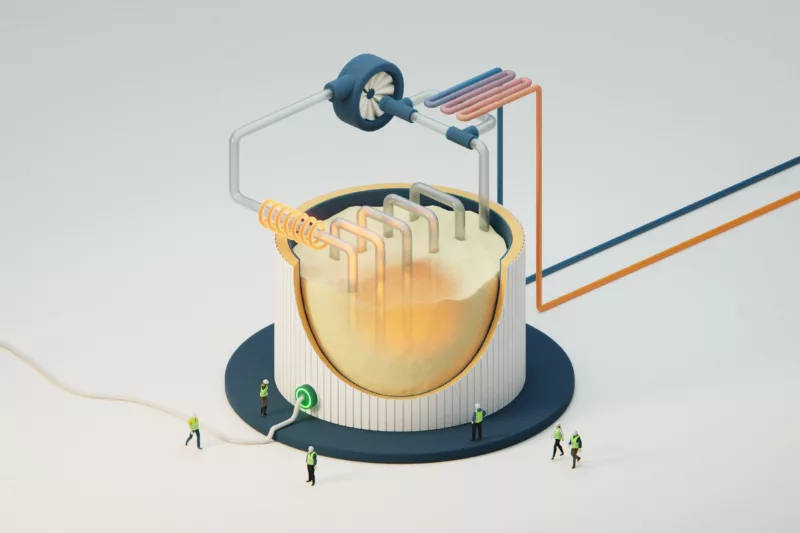
Sand batteries are high-temperature thermal energy storage units built from readily available, low-cost materials like sand or crushed soapstone. Surplus electricity—typically from wind or solar—is converted via resistive heating into heat, which is stored in massive insulated silos of sand. When needed, the heat is extracted through heat exchangers to supply district heating networks or industrial processes.
Unlike chemical batteries, they excel in seasonal storage, holding heat over months with minimal losses—up to 99% retention—and offer round‑trip efficiency of 85–90% .
REAL‐WORLD DEPLOYMENTS: FROM PILOTS TO SYSTEMS
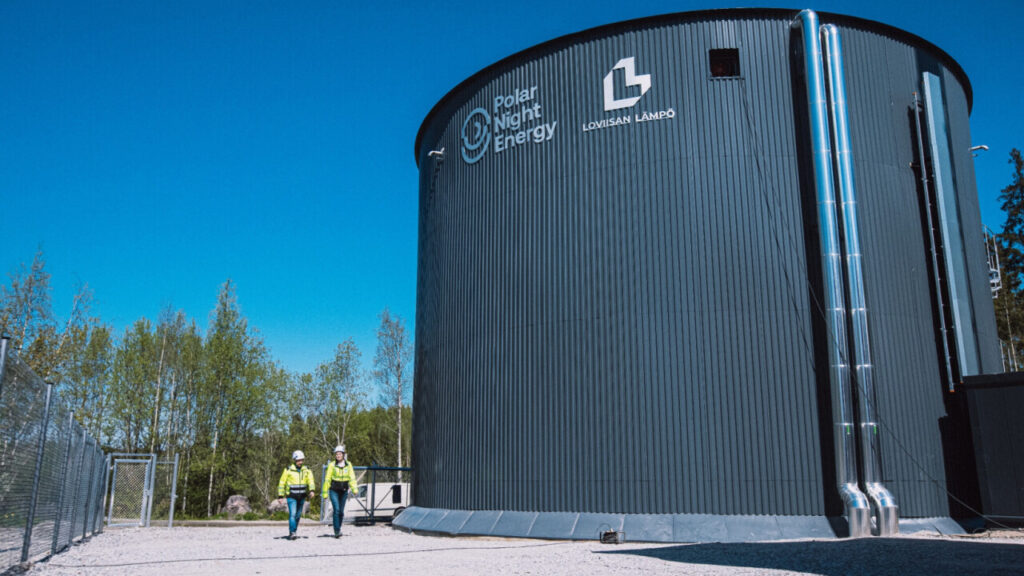
- Kankaanpää, Finland (2022): The world’s first commercial sand battery launched with 100 tons of sand, delivering 200 kW and 8 MWh capacity. It integrates with the Vatajankoski district heating network and even primes data‑center waste heat.
- Pornainen, Finland (2025): The world’s largest system—at 1 MW thermal power and 100 MWh capacity—started operations this summer. It supplies local district heating and aims to slash oil usage by nearly 70%.
Expansion is underway: plans include further 1 MW/100 MWh systems and pilot installations focused on converting stored heat back into electricity (power‑to‑heat‑to‑power).
WHY SAND BATTERIES MATTER FOR RENEWABLE INTEGRATION
- Seasonal flexibility: Store excess summer wind/solar for winter heating.
- Cost‑effective and reliable: Uses durable, abundant materials; minimal degradation over decades
- Grid balancing: Participate in ancillary service markets for frequency and reserve stability
- Emission reduction: The Kankaanpää pilot alone is estimated to save up to 100 Mt CO₂e by 2030 across EU deployments
TECHNICAL & ECONOMIC INSIGHTS
| Metric | Value |
|---|---|
| Heat retention | ~99% efficiency over months |
| Round‑trip efficiency | ~85–90% for heat recovery |
| Material cost | ~$30/ton for sand, largely waste soapstone |
| System lifespan | Designed for 30+ years, 8,000 hrs/yr uptime |
Initial CAPEX remains high—requiring funding and government support—but operations show strong ROI through heating bill savings, reduced fossil fuel consumption, and ancillary market revenue.
HORIZONS AHEAD: FROM HEAT TO ELECTRICITY
Next‑gen prototypes aim to not only release heat but also reconvert it to electricity using ORC (Organic Rankine Cycle) or steam turbines—yet these currently lag in efficiency (~50–70%).
These systems will bolster energy resilience in regions with seasonal climates or weak grids, offering scalable, long-duration storage independent of lithium battery supply chains.
Moreover, agencies like Finland’s Polar Night Energy have secured €7.6 million in funding to support R&D, expansion, and heat‑to‑power integration.
CONCLUSION
Sand batteries showcase how combining age-old materials with modern design can revolutionize renewable energy storage. Offering long-duration, cost-effective, and scalable solutions, they hold the power to smooth supply-demand imbalances, decarbonize heating grids, and unlock the full potential of green power resources.
For clean-tech investors and innovators, sand batteries provide a compelling intersection of low-risk materials, high environmental impact, and strong financial rationale—making them a cornerstone for the next wave of renewable infrastructure.