Autor: fundtechventures2024@gmail.com

  • WINNERS AND LOSERS IN RENEWABLE ENERGY INVESTMENT THIS YEAR

    WINNERS AND LOSERS IN RENEWABLE ENERGY INVESTMENT THIS YEAR

    As the year comes to an end, renewable energy investment offers a clear picture of how the sector is evolving. knowing winners and losers is crucial for next year. Capital has not disappeared, but it has become more selective, more strategic and far more demanding. Some technologies and business models have attracted sustained investor confidence, while others have struggled to justify their promises.

    Understanding the winners and losers of this year is essential for investors, founders and policymakers looking ahead to the next phase of the energy transition.

    WINNERS AND LOSERS IN RENEWABLE ENERGY INVESTMENT THIS YEAR

    THE WINNERS: WHERE CAPITAL FOUND CONFIDENCE

    ENERGY STORAGE AND GRID FLEXIBILITY

    Energy storage remained one of the strongest investment magnets. As renewable penetration increases, the need for grid stability and flexibility became undeniable. Battery storage, long-duration storage solutions and software-driven grid optimization platforms attracted both venture capital and infrastructure funds.

    Investors favored projects with clear paths to revenue, strong partnerships with utilities and realistic deployment timelines.

    SOLAR AND WIND WITH ADVANCED BUSINESS MODELS

    While solar and wind are mature technologies, companies that innovated on financing, asset management and digital optimization performed particularly well. Platforms offering predictive maintenance, performance analytics and hybrid project structures stood out.

    The shift from pure technology risk to execution and operational excellence played strongly in favor of these models.

    CLIMATE DATA, AI AND ENERGY SOFTWARE

    Digital solutions supporting renewable energy deployment emerged as quiet winners. AI-driven forecasting, energy management systems and carbon accounting platforms benefited from lower capital intensity and faster scalability.

    Investors increasingly saw software as a way to reduce risk while still gaining exposure to the energy transition.

    HYDROGEN INFRASTRUCTURE WITH REALISTIC ROADMAPS

    Despite the hype surrounding hydrogen, capital concentrated on infrastructure-focused projects with industrial off-takers and government backing. Early-stage speculative plays struggled, but pragmatic approaches tied to existing industrial demand performed significantly better.

    THE WINNERS: WHERE CAPITAL FOUND CONFIDENCE

    THE LOSERS: WHERE EXPECTATIONS FELL SHORT

    OVERHYPED EMERGING TECHNOLOGIES

    Several emerging technologies failed to meet investor expectations this year. Solutions that promised radical disruption but lacked pilot results, regulatory clarity or cost competitiveness found it increasingly difficult to raise capital.

    Investors showed little patience for concepts without proven technical validation.

    CAPITAL-INTENSIVE PROJECTS WITHOUT POLICY SUPPORT

    Projects requiring heavy upfront investment suffered when public incentives were delayed or reduced. In regions with regulatory uncertainty, renewable developments stalled, causing investors to reassess geographic risk more carefully.

    Policy stability proved just as important as technological readiness.

    EARLY-STAGE HARDWARE WITHOUT CLEAR SCALE PATHS

    Hardware-focused startups without manufacturing partnerships or scalable production strategies faced funding challenges. Rising costs and longer development cycles pushed many investors toward later-stage or asset-backed opportunities.

    The era of funding hardware on vision alone appears firmly behind us.

    WHAT THIS YEAR REVEALS ABOUT INVESTOR BEHAVIOR AND NEXT YEAR WINNERS

    This year reinforced a fundamental shift in renewable energy investment. Capital is still available, but it prioritizes resilience, execution and measurable impact. Investors increasingly favor technologies that integrate seamlessly into existing systems rather than those attempting to replace them entirely.

    Risk tolerance has narrowed, but conviction has deepened where fundamentals are strong.

    LOOKING AHEAD: LESSONS FOR 2026

    The winners and losers of this year send a clear message to the market. Renewable energy investment is entering a phase of maturity, where disciplined growth outweighs rapid expansion. Success will depend on realistic timelines, strong unit economics and alignment with policy frameworks.

    For founders and investors alike, the coming year will reward those who focus less on hype and more on building durable energy solutions.


  • WASTE-TO-ENERGY: CAN NEW TECH MAKE IT TRULY GREEN?

    WASTE-TO-ENERGY: CAN NEW TECH MAKE IT TRULY GREEN?

    For years, Waste-to-Energy (WtE) has sat in a controversial space: praised for reducing landfill dependency but criticized for emissions, cost, and questionable “green” credentials. Today, however, the conversation is shifting. A new generation of WtE technologies is emerging—more efficient, more transparent, and aligned with Europe’s climate goals. But can these innovations finally transform WtE into a truly sustainable solution?

    In this article, we explore the new wave of WtE technologies, analyse their environmental impact, and evaluate whether they can secure a place in the future renewable ecosystem.

    WASTE-TO-ENERGY

    THE PROBLEM: WASTE IS GROWING FASTER THAN RECYCLING CAN HANDLE

    Global waste generation is expected to rise by 70% by 2050, driven by urbanisation, consumption patterns and population growth. Recycling systems, while improving, cannot keep pace with this surge.

    As a result, cities face an urgent dual challenge:

    • mounting landfills that leak methane and contaminate ecosystems
    • increasing energy demand, especially in Europe and Asia

    This intersection of waste management and energy needs is where WtE technologies traditionally have played a role.

    WHY TRADITIONAL WASTE-TO-ENERGY IS NOT “GREEN ENOUGH”

    Conventional WtE plants rely on incineration, which has several drawbacks:

    • High CO₂ and NOx emissions despite modern filters
    • Ash residues that often still end up in landfills
    • Low energy efficiency compared to emerging technologies
    • Risk of undermining recycling goals, since plants need a steady waste stream

    This has slowed adoption in Europe and raised concerns among climate policymakers.

    THE NEW GENERATION OF WASTE-TO-ENERGY TECHNOLOGIES

    There is a new wave of WtE innovation aims to eliminate the weaknesses of incineration while creating higher-value outputs. The most promising categories include:

    1. ADVANCED GASIFICATION

    Gasification converts waste into syngas, which can be used for electricity, hydrogen production, or as a chemical feedstock.
    Benefits:

    • Far lower emissions than incineration
    • Higher efficiency
    • Ability to process mixed waste
    • Potential integration with green hydrogen plants

    Its main barrier remains high capex and the need for highly controlled operating conditions.

    2. PYROLYSIS FOR PLASTICS AND ORGANICS

    Pyrolysis heats waste in the absence of oxygen, producing bio-oils, biochar, and syngas.
    Benefits:

    • Ideal for hard-to-recycle plastics
    • Produces liquid fuels or chemical precursors
    • Lower pollutants

    This technology is now gaining significant traction, especially in northern Europe and Southeast Asia.

    3. ANAEROBIC DIGESTION 2.0

    The latest digesters can convert organic waste into biomethane at much higher yields, leveraging AI for microbial optimisation.
    Benefits:

    • Closed-loop, low-emission process
    • Produces renewable gas compatible with existing networks
    • Generates digestate for fertilisers

    Cities with strong food waste collection systems benefit most from this model.

    4. PLASMA GASIFICATION

    A cutting-edge but costly solution, plasma gasification uses extreme heat to break waste into its elemental components.
    Benefits:

    • Virtually zero toxic emissions
    • Produces high-quality syngas
    • Converts ash into reusable construction material

    Its economic viability is still limited, but several pilot projects show promise.

    THE ROLE OF CCUS: CAN CARBON CAPTURE MAKE WTE CARBON-NEGATIVE?

    When combined with Carbon Capture, Utilisation and Storage (CCUS), WtE plants can dramatically reduce emissions. Some studies suggest that bio-based waste streams, when processed with CCUS, could even achieve carbon-negative energy.

    Yet high costs, infrastructure limitations, and regulatory uncertainty remain obstacles.

    IS WASTE-TO-ENERGY FINANCIALLY ATTRACTIVE FOR INVESTORS?

    Investment interest is growing due to:

    • EU policy pressure to reduce landfills
    • Corporate demand for circular economy solutions
    • Decarbonisation incentives
    • Advances in energy storage and hydrogen

    However, investors must carefully evaluate:

    • local regulatory frameworks
    • long-term feedstock availability
    • technology maturity
    • community acceptance

    The most bankable projects combine WtE with material recovery, energy production, and even district heating networks.

    WASTE-TO-ENERGY

    SO… CAN WASTE-TO-ENERGY BECOME TRULY GREEN?

    The short answer: yes, but only with the right technology and integration strategy.

    Next-generation WtE can significantly reduce emissions, upcycle materials, and provide reliable clean energy—but incineration-based models will struggle to meet future climate targets. The real shift will come from gasification, pyrolysis, biomethane, and CCUS-enabled facilities, ideally integrated into a wider circular ecosystem.

    CONCLUSION: THE FUTURE OF WASTE-TO-ENERGY DEPENDS ON INNOVATION, NOT INCINERATION

    Waste-to-Energy can evolve into a genuinely sustainable solution, but only if cities and investors prioritise advanced low-emission technologies, material recovery, and circular business models. The sector is at a crossroads: innovation is accelerating, regulation is tightening, and the need for clean energy is greater than ever.

    If WtE wants a place in Europe’s renewable future, it must transform—and fast.

  • GREEN DATA CENTERS: HOW RENEWABLE ENERGY IS TRANSFORMING THE FUTURE OF DIGITAL INFRASTRUCTURE

    GREEN DATA CENTERS: HOW RENEWABLE ENERGY IS TRANSFORMING THE FUTURE OF DIGITAL INFRASTRUCTURE

    Data centers are becoming the backbone of the global economy, powering everything from AI models to financial operations and cloud-based services. But as digital demand accelerates, so does the pressure on energy systems. The sector already consumes around 2–3% of global electricity, and this figure is expected to rise sharply with the expansion of generative AI and edge computing.

    For investors and innovators, this challenge is opening one of the most dynamic growth markets within the renewable energy ecosystem: green centers.

    WHY GREEN DATA CENTERS ARE BECOMING A STRATEGIC PRIORITY

    Traditional data centers rely heavily on fossil-fuel-based electricity and inefficient cooling systems. This model is no longer viable. Countries across Europe, the Middle East, and Asia are pushing new efficiency standards, while major tech companies are racing to meet ambitious carbon-neutrality commitments.

    Green data centers address these challenges by integrating:

    • Direct renewable energy sourcing (solar PPA, wind PPA, hydro partnerships)
    • Advanced cooling systems, including liquid immersion and seawater cooling
    • On-site storage to stabilize energy flows
    • AI-driven energy optimization that can cut consumption by up to 40%

    The result is a new generation of digital infrastructure that is cleaner, cheaper to operate, and significantly more resilient.

    THE RISE OF ENERGY-FLEXIBLE DATA INFRASTRUCTURE

    A key trend is the shift toward energy-flexible data centers, capable of adjusting computing loads according to renewable generation peaks. This creates a symbiotic relationship between tech operators and grid operators:

    • When renewable production is high, data centers scale up workloads.
    • When supply falls, non-critical processes are postponed or shifted geographically.

    This flexibility allows grids to integrate more renewables without risking stability — a crucial advantage in regions rapidly phasing out fossil fuels.

    HYDROGEN, HEAT RECOVERY, AND THE NEXT WAVE OF INNOVATION

    Beyond renewables, companies are experimenting with technologies that can redefine the sector:

    • Hydrogen-powered backup systems, replacing diesel generators
    • District heating through waste-heat recovery, turning heat into a revenue stream
    • Modular micro-data centers, designed to operate entirely off-grid with local renewable sources

    These innovations are transforming data centers from energy-intensive facilities into active contributors to clean-energy ecosystems.

    WHY THIS MATTERS FOR INVESTORS

    The convergence of digital growth and sustainability is creating one of the most compelling investment landscapes of the decade:

    • Governments are offering new incentives for green digital infrastructure
    • Corporations face regulatory pressure to decarbonize operations
    • Renewable PPAs for data centers have become a fast-growing asset class
    • Energy-efficient infrastructure dramatically lowers long-term OPEX

    In short, green data centers are not only an environmental necessity — they are an economic opportunity.

    THE LONG-TERM OUTLOOK FOR GREEN DATA CENTERS

    As the digital economy expands, the future of data infrastructure will be defined by its ability to integrate renewable energy, operate efficiently, and support grid stability. For investors and technology leaders, green data centers represent a strategic pivot point: a chance to meet the rising demand for computing power while accelerating the global transition to clean energy.

  • THE RISE OF GREEN HYDROGEN IN EUROPE: INVESTMENT OPPORTUNITIES AND CHALLENGES

    THE RISE OF GREEN HYDROGEN IN EUROPE: INVESTMENT OPPORTUNITIES AND CHALLENGES

    Once considered an expensive and distant technology, green hydrogen has become one of Europe’s central bets in the race toward decarbonization. Over the past five years, massive public and private investment has transformed it from a scientific promise into a strategic industrial reality.

    GREEN HYDROGEN

    Hydrogen is no longer a niche experiment for laboratories or pilot projects — it’s now embedded in national energy plans, venture portfolios, and climate roadmaps. From Spain’s solar deserts to the wind corridors of the North Sea, European countries are building a new clean-energy economy based on the most abundant element in the universe.

    At its core, green hydrogen represents a deep-tech convergence: electrochemistry, artificial intelligence, advanced materials, and renewable infrastructure coming together to power a carbon-free industrial ecosystem. This combination of frontier science and scalable technology is precisely what attracts long-term capital — and it’s why green hydrogen is rapidly becoming the “next big bet” for climate-focused investors.

    GREEN HYDROGEN: EUROPE’S PATH TO DECARBONIZATION

    The European Union’s 2050 Net Zero Strategy places hydrogen at the center of its clean-energy agenda. Unlike fossil-based “grey hydrogen,” green hydrogen is produced through electrolysis powered by renewable energy, emitting no CO₂ in the process.

    Its versatility makes it indispensable for hard-to-abate sectors — industries like steel, cement, shipping, fertilizers, and heavy transport, where direct electrification remains unfeasible.

    According to the European Commission, the goal is to deploy at least 40 GW of electrolyzers by 2030, a target equivalent to powering more than 25 million tons of carbon-free hydrogen annually. Countries such as Germany, Spain, Portugal, and the Netherlands have launched national roadmaps backed by billions in incentives, creating a race to become Europe’s hydrogen hub.

    Spain, for instance, plans to allocate over €10 billion through its PERTE program, focusing on green hydrogen corridors, production clusters, and export terminals. Meanwhile, Germany’s H2Global initiative is building international partnerships to import renewable hydrogen from southern Europe, North Africa, and Latin America.

    THE INVESTMENT LANDSCAPE: CAPITAL FLOWING INTO GREEN HYDROGEN

    The surge of capital in hydrogen-related technologies is reshaping Europe’s energy innovation map. In 2024, global hydrogen investment exceeded $8 billion, with Europe accounting for nearly 40% of total venture and corporate deal flow.

    Some of the most notable European players include:

    • H2 Green Steel (Sweden) – Raised over €6 billion to build one of the world’s first large-scale green steel plants using hydrogen-powered furnaces.
    • Lhyfe (France) – A pioneer in offshore hydrogen production directly linked to wind farms.
    • H2B2 (Spain) – Developing modular electrolyzers, backed by Iberdrola and Cummins, and expanding across Europe and the Americas.
    • Sunfire (Germany) – Specializing in high-temperature solid oxide electrolyzers (SOEC), funded by Carbon Direct and other deep-tech investors.

    Investment opportunities extend beyond production. The value chain includes infrastructure (pipelines, storage facilities, port logistics) and enabling technologies such as data analytics for plant optimization, AI-driven maintenance, and advanced materials for membranes and catalysts.

    Institutional investors and family offices are also increasingly entering the space, often through specialized funds focused on clean hydrogen, like Hy24 Partners, Breakthrough Energy Ventures, and HydrogenOne Capital Growth.

    GREEN HYDROGEN_WOMAN

    GREEN HYDROGEN CHALLENGES: COST, SCALE, AND POLICY ALIGNMEN

    Despite its potential, the path to a fully integrated hydrogen economy remains steep. The main challenges are economic, technological, and regulatory:

    1. High production costs — Green hydrogen currently ranges between €3–6/kg, compared to €1–2/kg for fossil-based hydrogen. Scaling up renewable capacity and improving electrolyzer efficiency are key to achieving parity.
    2. Renewable energy availability — The success of hydrogen depends on abundant and cheap renewable electricity. Countries with strong solar and wind resources — such as Spain, Portugal, and Greece — are best positioned.
    3. Infrastructure gaps — Europe’s hydrogen backbone is still in early development. The EU’s “Hydrogen Backbone Initiative” plans 40,000 km of pipelines by 2040, but cross-border connections and storage remain fragmented.
    4. Policy fragmentation — Different certification systems and incentives across member states complicate international trade and slow down project financing.

    However, strong momentum is building. The European Hydrogen Bank, expected to mobilize €800 million in auction funding by 2026, aims to de-risk early-stage projects and accelerate private investment. Complementary instruments from the European Investment Bank (EIB) and national green funds are already fueling a new generation of bankable hydrogen ventures.

    A DEEP-TECH OPPORTUNITY WITH GLOBAL IMPLICATIONS

    Green hydrogen is more than an energy solution — it’s a technological revolution. The next breakthroughs will come from deep-tech innovators working on membrane durability, catalyst efficiency, and AI-driven energy management. These advancements could cut production costs by 50% within a decade, unlocking massive market potential.

    Moreover, hydrogen’s geopolitical dimension is expanding. Partnerships between Europe and regions like North Africa and Latin America are establishing new supply corridors that combine renewable abundance with industrial demand. Morocco, Chile, and Brazil are emerging as global suppliers, linking their solar potential to Europe’s decarbonization needs.

    A NEW INDUSTRIAL ERA FOR EUROPE

    Hydrogen will not replace electrons — it will complement them. Its strategic role in industrial decarbonization, grid balancing, and energy security positions it as a cornerstone of Europe’s post-carbon economy.

    For investors, this decade will define who shapes the infrastructure and technology behind that transformation. Those who combine patient capital, technological insight, and cross-sector collaboration will stand at the forefront of Europe’s new green industrial revolution.

  • GLOBAL FUNDING TRENDS 2025: WHERE (AND WHY) CAPITAL IS FLOWING IN TECH VENTURES

    GLOBAL FUNDING TRENDS 2025: WHERE (AND WHY) CAPITAL IS FLOWING IN TECH VENTURES

    After two turbulent years marked by inflation, geopolitical tension, and tightening monetary policy, 2025 is emerging as a year of cautious optimism in global venture funding.
    While the easy-money era is over, capital is once again on the move — but it’s flowing differently. Investors are prioritizing technologies with tangible, scalable impact and founders who can balance innovation with resilience.

    1. GLOBAL FUNDING: AI LEADS, BUT MATURITY MATTERS

    Artificial Intelligence continues to dominate global funding charts. Yet, the frenzy of 2023–2024 has evolved into a more selective phase.

    • Investors are focusing on infrastructure over applications: chips, cloud optimization, and model-training efficiency.
    • Startups offering “AI-plus” solutions — those combining AI with other sectors such as health diagnostics, energy optimization, or cybersecurity — are the ones raising larger rounds.
    • Generative AI still attracts headlines, but “AI with ROI” is the investor mantra of 2025.

    According to PitchBook, global AI investment surpassed $120 billion in Q3 2025, but 60% of that capital went to fewer than 10% of companies, highlighting a consolidation trend toward proven teams and technologies.

    2. FINTECH’S SECOND ACT: INFRASTRUCTURE AND INCLUSION

    Fintech remains resilient despite regulatory headwinds. What’s changing is the focus:

    • Embedded finance, cross-border payments, and financial infrastructure APIs are attracting mid-stage capital.
    • Investors are also turning toward financial inclusion in emerging markets — Africa, LATAM, and Southeast Asia — where digital wallets and micro-lending platforms are scaling fast.

    In Europe, a new wave of fintechs is emerging around ESG-aligned financial products and green compliance tools, reflecting investors’ growing appetite for finance that drives sustainability.

    3. BIOTECH AND HEALTH TECH REGAIN INVESTOR CONFIDENCE

    After a slowdown in 2023, biotech is rebounding with stronger fundamentals:

    • mRNA platforms, AI-driven drug discovery, and longevity research are once again in favor.
    • Venture capitalists are backing startups that can bridge biotech with data science and deliver measurable clinical outcomes.

    The U.S. and the U.K. remain the top biotech hubs, but Spain, Singapore, and South Korea are gaining ground through public-private partnerships and accelerated regulatory pathways.

    4. CLIMATE TECH AND ENERGY INNOVATION STAY STRONG

    Despite macroeconomic uncertainty, climate tech remains one of the fastest-growing verticals.
    Investments are flowing toward:

    • Battery innovation and long-duration storage
    • Carbon capture and utilization technologies
    • Hydrogen valleys and decentralized energy systems

    Investors are favoring startups that move beyond prototypes to deployable infrastructure, aligning with new EU and U.S. funding frameworks. Climate tech now represents 14% of global venture funding, up from 9% in 2022.

    5. THE RISE OF FRONTIER TECHNOLOGIES

    Quantum computing, space tech, and synthetic biology are attracting renewed attention from sovereign funds and corporate venture arms.

    • Quantum software and hardware optimization are moving from labs to pilot deployments.
    • Space data analytics is becoming a key area for climate modeling and defense applications.
    • Synthetic biology startups are gaining traction in materials, food, and healthcare.

    While still niche, these sectors define the next frontier of venture risk — where public capital often leads the way, paving paths for private investors.

    6. REGIONAL FLOWS: GLOBAL CAPITAL GOES MULTIPOLAR

    The global venture map is no longer U.S.-centric.

    • Europe is benefiting from new sovereign funds and tech-friendly regulation.
    • The Middle East — especially the UAE and Saudi Arabia — is emerging as a new venture capital powerhouse, channeling oil wealth into AI, biotech, and energy startups.
    • LATAM and Africa are seeing a boom in early-stage funding, fueled by mobile connectivity and diaspora-driven investment networks.

    This redistribution signals a more balanced global innovation ecosystem, though it also means founders must navigate diverse regulatory and cultural contexts when raising funds.

    7. CONCLUSION GLOBAL FUNDING TRENDS: 2025 IS ABOUT STRATEGIC RESILIENCE

    In 2025, success in fundraising is not just about innovation — it’s about execution, efficiency, and ecosystem awareness.
    Investors are backing teams that understand how to build sustainable growth models, manage capital wisely, and align technology with real-world outcomes.

    The winners of this cycle will be those who turn scarcity into strategy — founders who adapt, collaborate, and scale with purpose.

  • THE FUTURE OF ENERGY STORAGE: A DEEP DIVE INTO NORTHVOLT’S BATTERY ODYSSEY

    THE FUTURE OF ENERGY STORAGE: A DEEP DIVE INTO NORTHVOLT’S BATTERY ODYSSEY

    The global energy transition depends not only on renewables, but on efficient, scalable energy storage to smooth variability. Among the many players in battery technology, Northvolt emerged a few years ago as Europe’s flagship bet — aiming to build “the world’s greenest battery.” Its journey offers a rich, cautionary, and instructive case for startups, investors, and policy makers in the battery and clean-tech space.

    THE BIRTH AND AMBITION OF NORTHVOLT

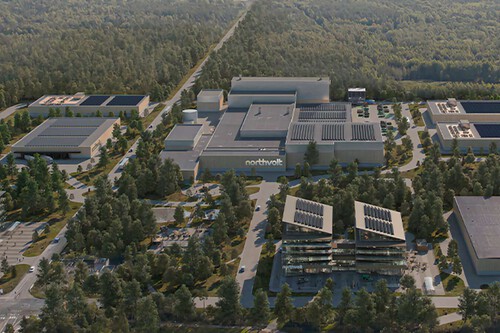
    Northvolt, founded in 2016 in Sweden, set out with a bold mission: to build truly sustainable lithium-ion batteries, sourcing materials ethically, minimizing carbon footprint, and anchoring Europe in the strategic value chain.

    Its ambition was vertical: cover the full lifecycle — raw materials, cell production, recycling, and scaling to gigafactories. The aim was to challenge Asia’s dominance in battery manufacturing.

    KEY MILESTONES & INVESTMENTS

    • Northvolt succeeded in raising massive capital, including backing from Volkswagen, Goldman Sachs, and other institutional investors.
    • They built and scaled gigafactories in Sweden and had plans for expansion across Europe.
    • In their strategy, they put great emphasis on sustainability: recycled materials, low-carbon energy inputs, and transparency in supply chains.

    NORTHVOLT: CHALLENGES & SETBACKS

    Despite the promise and support, Northvolt encountered severe challenges:

    1. Capital Intensity & Scaling Risks
      Battery manufacturing requires huge upfront capital, with narrow margins until scale is achieved. Northvolt’s ambitious scaling stretched its finances.
    2. Supply Chain Constraints & Geopolitics
      Access to raw materials (lithium, nickel, cobalt) is global and exposed to trade and political risks. Competing with entrenched supply chains in Asia proved tougher than anticipated.
    3. Operational Complexity
      Managing multiple gigafactories, coordinating R&D, recycling, and production under one roof is extraordinarily complex. Integration across those verticals introduces risk.
    4. Market Conditions & Cost Pressure
      Inflation in material costs, higher interest rates, and shifts in demand dynamics made the business environment harsher. The margins in battery manufacturing are sensitive to small fluctuations in cost structure.
    NORTHVOLT

    THE TURNING POINT: BANKRUPTCY & LESSONS OF NORTHVOLT

    In 2025, Northvolt filed for bankruptcy in Sweden. The failure underscored how a strong vision alone cannot overcome financial, operational, and market realities when scaling is aggressive and capital markets tighten.

    From this experience, we derive these lessons:

    • Phased Growth vs. Grand Ambitions
      More sustainable might be incremental expansion rather than trying to do everything at once.
    • Focus on Key Verticals
      Avoid spreading into too many segments (e.g. raw extraction + full scale manufacturing + recycling) before mastery of core.
    • Supply Chain Flexibility
      Diversify sources, build buffer strategies, and mitigate geopolitical exposure.
    • Resilience to Volatility
      Battery startups must design for cost shocks: hedges, modularity, fallback plans.
    • Strategic Partnerships
      Collaborations with established automakers, energy firms or governments can share risk, but alignment is critical.

    COMPARATIVE CASE: ITALY’S BATTERY STORAGE AUCTION

    While Northvolt’s story is about a battery manufacturer, it’s illuminating to contrast with a national-level case: Italy’s first battery storage auction. In 2025, Italy awarded 10 GWh of energy storage capacity, with utility Enel securing over half the projects.

    • The contracts guarantee revenue for 15 years, reducing off-take risk.
    • The auction cleared at a low price per MWh, indicating maturity and competition in the sector.
    • Italy’s approach shows how government/market frameworks can de-risk battery deployment and attract capital.

    This contrasts with Northvolt’s risk exposure: Italy’s model offloads some risk to the state and provides a predictable revenue stream, which is attractive for project developers.

    WHAT THIS MEANS FOR STARTUPS, VCs & POLICIES

    • Startups should balance vision with discipline: target niches with clear product-market fit first, limit capital stretch, and maintain flexibility.
    • VCs and investors need deep domain understanding: battery businesses are not typical “software multiples” — risk of capital consumption is high.
    • Policy makers play a pivotal role: stable auctions, long-term contracts, grants or guarantee mechanisms can catalyze battery deployment. Italy’s example is instructive.
    • Ecosystem building (materials, recycling, manufacturing, grid integration) must proceed in parallel — no one component can be isolated.

    CONCLUSION

    Northvolt’s journey — from aspirational European battery champion to bankruptcy — is a compelling, cautionary tale. It highlights how vision, capital, technical excellence, and operational execution must align. Meanwhile, national strategies like Italy’s battery auction show how markets and public policy can support large-scale deployment of battery storage in a de-risked manner.

    For FundingTechVenture’s readers, the key takeaway is: battery innovation is high stakes, not just high potential. The winners will be those who combine deep tech with financial realism, modular scaling, and structural support from policy.

  • HEALTHTECH: THE ROLE OF AI IN REMOTE DIAGNOSIS AND MEDICAL MONITORING

    HEALTHTECH: THE ROLE OF AI IN REMOTE DIAGNOSIS AND MEDICAL MONITORING

    Artificial Intelligence (AI) is no longer just a buzzword in healthtech — it is rapidly becoming a critical tool in how we diagnose, monitor, and even prevent diseases. The global shift towards telemedicine and digital health solutions has created fertile ground for AI-powered innovations, particularly in remote diagnosis and patient monitoring.

    HEALTHTECH

    WHY AI MATTERS IN HEALTHTECH

    Traditional healthcare models depend heavily on physical visits, long diagnostic procedures, and limited real-time monitoring. AI addresses these pain points by:

    • Speeding up diagnoses with advanced image recognition and pattern detection.
    • Providing 24/7 monitoring through wearable devices and IoT medical sensors.
    • Improving accuracy by analyzing vast amounts of patient data in seconds.

    This makes healthcare more accessible, proactive, and cost-efficient, especially for patients in rural or underserved areas.

    AI IN REMOTE DIAGNOSIS

    One of the most promising applications of AI is its ability to assist doctors in identifying diseases earlier and with higher precision:

    • Medical imaging: AI algorithms can detect anomalies in X-rays, CT scans, and MRIs, often spotting issues that human eyes might overlook.
    • Predictive analytics: By analyzing electronic health records (EHRs), AI can flag potential conditions before symptoms even appear.
    • Virtual consultations: Integrated AI tools can support doctors during telemedicine sessions, providing instant diagnostic suggestions.

    AI IN MEDICAL MONITORING

    Chronic diseases like diabetes, cardiovascular conditions, and respiratory disorders require constant management. AI-powered tools now make it possible to:

    • Track patient vitals via wearables and smart devices, sending real-time data to clinicians.
    • Use machine learning algorithms to detect irregularities (e.g., arrhythmias or sudden blood sugar spikes).
    • Provide personalized treatment recommendations by adapting insights to each patient’s lifestyle and medical history.
    HEALTHTECH

    CHALLENGES AND ETHICAL CONSIDERATIONS

    While the benefits are clear, there are also challenges:

    • Data privacy and security: Patient information must be protected under strict regulations (HIPAA, GDPR).
    • Algorithmic bias: AI models must be trained on diverse datasets to avoid misdiagnosis across demographics.
    • Trust and adoption: Doctors and patients alike need transparency to trust AI recommendations.

    THE FUTURE OF AI IN HEALTHTECH

    The next frontier lies in predictive and preventive medicine, where AI doesn’t just help diagnose and monitor but actively prevents illness by anticipating risks. With venture capital funding flowing into digital health and governments incentivizing telemedicine, AI-driven HealthTech solutions are set to scale globally.

    For startups and investors, this is a prime moment: companies that successfully combine AI innovation with patient-centric design will shape the future of healthcare.

  • 4 TIPS FOR HIRING EMPLOYEES IN THE STARTUP WORLD

    4 TIPS FOR HIRING EMPLOYEES IN THE STARTUP WORLD

    Hiring the right team members is one of the most critical steps for any startup. Your early hires will shape your company culture, determine how quickly you can pivot and scale, and often make or break your path forward. Here are four practical tips to help you make smart hiring decisions in the startup environment.

    Group of people working out business plan in an office

    1. WHEN HIRING: PRIORITIZE ADAPTABILITY OVER EXPERIENCE

    In a startup, change is the only constant. What you need more than someone who’s mastered a narrow specialty is someone who can wear multiple hats, learn fast, and roll with the punches.

    • Look for candidates who have worked in ambiguous or fast-changing environments.
    • Pose interview questions that test flexibility. For example:
      • “Tell me about a time when your role changed overnight. How did you adapt?”
      • “Describe a project where requirements kept evolving. What did you do?”
    • Set expectations early: everyone may need to pitch in outside their formal job description.

    2. CULTURAL FIT + SHARED VALUES

    Skills can be learned, but alignment in values, work ethic, and attitude can’t easily be taught. For a startup, culture is not just “nice to have”—it’s a foundation.

    • Define your company culture and values clearly. What do you stand for? What behaviors matter?
    • During the hiring process, test for cultural fit. Ask how a candidate handles stress, failure, or disagreement.
    • Use trial periods or project-based contracts early on to see how someone works in your real environment.
    HIRING
    Image of young colleagues in office talking with each other using computer.

    3. SEEK VERSATILE SKILL SETS & GROWTH MINDSET

    Startups often require people who can cross functional boundaries. Someone who can bring extra dimensions—technical + communication, product + marketing, etc.—adds big leverage.

    • Prefer candidates who have experience in more than one domain.
    • Look for evidence of continuous learning: taking courses, side projects, formal or self-taught upskilling.
    • Encourage “T-shaped” or “pi-shaped” team members: deep in one or two areas, broader skills in others.

    4. FOLLOW A HIRING STRATEGY: COMPENSATION AND EQUITY

    Hiring in startups often means limited cash, but you’ve got something more—potential upside. Crafting the right compensation mix can attract talent even when you can’t match large salaries.

    • Be transparent. Let candidates know trade-offs: salary vs. equity vs. perks vs. growth opportunity.
    • Offer meaningful equity or profit sharing when possible. Even small percentages matter when someone believes in the mission.
    • Use creative non-monetary incentives: flexible work schedules, remote/hybrid options, fast decision-making, learning opportunities, clear paths to promotion.
    • Benchmark your offers against other startups in your sector to ensure you’re competitive. Investors, advisors, or talent networks can help with this.

    BONUS TIP ON HIRING: STRUCTURE THE HIRING PROCESS FOR SPEED & FEEDBACK

    Startups move fast. A long, bureaucratic hiring process will cost you good candidates. Keep things lean.

    • Keep interviews focused and timely—try to give feedback within a few days.
    • Involve key decision-makers early so approvals don’t drag.
    • Use small test tasks or assignments where appropriate instead of multiple long interviews.
    • Prioritize clarity in your job descriptions so candidates know what they’re walking into.

    FINAL THOUGHTS

    Building a team is one of the first big tests for any startup. Hiring the right people—those who are flexible, aligned with your values, eager to grow, and okay with trade-offs—gives you a strong foundation to scale. Use these tips to shape a recruiting process that’s not only about filling seats, but cultivating a high-performance, mission-driven team.

  • IS THERE A UNICORN BUBBLE IN THE STARTUP ECOSYSTEM?

    IS THERE A UNICORN BUBBLE IN THE STARTUP ECOSYSTEM?

    Short answer: not one unicorn bubble—rather, a bifurcated market. AI mega-rounds are inflating headline stats while a long tail of “paper unicorns” is quietly repricing through down/flat rounds and investor-friendly structures.

    WHAT THE DATA SAYS (2024–2025)

    • Unicorns are no longer rare. As of mid-2025, CB Insights tracks 1,200+ unicorns globally. The club remains large after the 2021–22 surge.
    • AI dominates new $1B+ creations. In 2025 YTD, over half (≈57%) of newly minted unicorns are AI companies—evidence of capital concentration in a single theme.
    • Repricing is real. Roughly one-quarter of U.S. venture rounds in 2024 were flat or down—a decade high—signaling valuation normalization under the surface.
    • Exits are recovering—but not roaring. The IPO window in 2025 looks “stabilizing/normal,” not hot; momentum has improved from 2024 but the liquidity gap persists.

    THE “PAPER UNICORN” PHENOMENON

    Not every $1B headline equals $1B of common equity value. In 2024–2025:

    • Structured terms persisted. Deals with enhanced investor protections (participating prefs, higher liquidation multiples, ratchets, cumulative dividends) stayed elevated versus the last cycle’s norms.
    • “Pay-to-play” clauses ticked up. Cooley data (via Axios) showed a record share of deals including pay-to-play provisions in mid-2024—another sign of negotiating power shifting to new money.
    • Capital stack math matters. Academic work finds junior securities in venture-backed firms can be marked far above fair value if you ignore senior preferences—creating the illusion of higher per-share prices.

    Some unicorn status rests on terms that protect new investors and subordinate common/earlier holders. On exit, those preferences “eat first,” so a $1B post-money round can translate into much less for founders and employees.

    LIQUIDITY: THE REAL SAFETY VALVE FOR BUBBLES

    Bubbles usually burst at the exit. Today’s tape is mixed:

    • IPOs: 2025 shows more activity and a shift from “cold” toward “normal,” but we’re not in a 2021-style boom. Select venture-backed debuts have worked; many others remain sidelined.
    • M&A and secondaries: Venture exit value remains below what’s needed to clear the backlog of high-valuation privates, even if counts are improving. Secondaries help, but often at discounts.

    If liquidity continues to thaw, the pressure under unicorn valuations eases; if it stalls, more “quiet” resets (down rounds, structured extensions, recaps) are likely.

    UNICORN BUBBLE

    SO…IS THERE A UNICORN BUBBLE?

    Not uniformly. Here’s a balanced take:

    • Pockets of froth: Late-stage AI platform leaders and companies with clear network effects can support eye-popping private valuations, and some are still stepping up in private markets. That concentration can look bubble-ish.
    • Broad-market normalization: Elevated down/flat rounds and investor-friendly terms are classic signs of deflation, not inflation, across much of the cap table universe.
    • Exit tape improving, not exuberant: A healthier, but restrained, IPO window argues against a full-blown bubble narrative.

    We’re in a two-speed market—select leaders may merit premium prints; many others are living with “synthetic” $1B caps that will normalize unless growth and margins inflect.

    GUIDANCE ON UNICOR BUBBLE FOR FOUNDERS (PRAGMATIC, NOT PREACHY)

    1. Optimize for “real” valuation. Negotiate for cleaner terms where you can; model waterfalls so your team knows how preferences and ratchets affect common outcomes across exit scenarios.
    2. Show unit-economic proof. Investors will pay for efficient growth: credible cohort retention, improving payback, and declining burn multiples beat vanity TAM slides. (This is what reopens IPO/M&A paths.)
    3. Plan for multiple paths to liquidity. Run dual-track readiness (IPO/M&A), and keep optionality via secondary programs that don’t cripple the cap table.
    4. Beware “easy” $1B rounds. Structured extensions can solve today’s cash need but mortgage tomorrow’s outcomes; model the trade-offs.

    GUIDANCE FOR INVESTORS & LPS

    • Underwrite to distributions, not paper marks. The backlog of high-valuation privates means DPI discipline matters more than TVPI optics.
    • Separate AI signal from noise. Back infrastructure + durable enterprise workflows over hypey apps; look for pricing power and switching-cost moats.
    • Term-sheet governance. Use structure sparingly and transparently; avoid preferences that misalign boards and delay hard decisions.

    VERDICT ON UNICORN BUBBLE

    There’s no single “unicorn bubble” today. There are frothy pockets—chiefly around top-tier AI platforms—coexisting with a broad-based digestion of 2021–22 excess. As exits normalize and capital costs stay non-zero, expect fewer true unicorns, more scrutiny of terms, and a premium on efficient, defensible growth.

  • AUSTRALIA’S SUPERANNUATION AND PENSION FUNDS: UNLOCKING LONG-TERM CAPITAL FOR DEEP TECH

    AUSTRALIA’S SUPERANNUATION AND PENSION FUNDS: UNLOCKING LONG-TERM CAPITAL FOR DEEP TECH

    Australia ’s superannuation system—a compulsory and well-regulated retirement savings framework—has evolved into a major institutional investor poised to drive growth in deep technology sectors. With assets under management exceeding A$4.1 trillion, these funds possess both the capital and long-term investment horizon needed to fuel innovation in deep tech.

    Australia ´s superannuation and pension funds

    The advantage of super funds as long-term capital providers

    Superannuation funds have unique features that make them ideal backers for deep tech ventures. These characteristics set them apart from traditional investors:

    • Built for the long haul: Superannuation funds operate with inherently long investment horizons, enabling them to back illiquid, high-growth sectors like deep tech over extended periods.
    • Scale and sustainability: Their massive, sustained inflows—such as A$3.2 billion each week—provide the stability required for patient capital deployment.

    Deep-Tech: A natural fit for super fund capital

    The relationship between deep tech’s needs and superannuation funds’ capabilities is particularly strong. Here’s why they are such a good match:

    • Strategic alignment: According to Damian Kassabgi, head of the Tech Council of Australia, deep tech—encompassing areas like quantum R&D—demands long-term support, a need well-matched by super funds.
    • Untapped potential: Kassabgi also estimates that channeling just 1% of superannuation into tech and innovation could inject over A$30 billion into the sector.

    Institutional momentum and global reach in Australia

    Super funds are already playing an active role in innovation, both locally and internationally. Their involvement can take several forms:

    • Backing through established channels: Australian super funds are investing indirectly in startups via VC firms like Blackbird Ventures. Notable participants include AustralianSuper, Hostplus, HESTA, and Aware Super.
    • Diversification into digital infrastructure: Global managers such as Macquarie Asset Management facilitate super fund investments in AI-supportive infrastructure—like data centers and fiber networks—in the US.

    Policy & productivity impacts

    Beyond funding, superannuation investments influence the broader economy. Recent studies highlight the following impacts:

    • Call for policy reform: ASFA recommends stabilizing regulation and redefining performance benchmarks to encourage investment in long-term sectors such as advanced manufacturing and digital infrastructure—key allies for deep tech expansion.
    • Productivity gains: Research by ASFA shows that superannuation investments have contributed to approximately a 2% uplift in Australia’s productivity and GDP, adding around A$2,500 in pre-tax wages per worker annually.

    Challenges and future outlook for Australia

    While the potential is enormous, certain barriers need to be addressed to unlock the full impact of super fund capital in deep tech:

    • Liquidity and governance hurdles: Super funds must balance demands for liquidity (due to member switching) and governance constraints, which can complicate direct investments in small or early-stage deep tech ventures.
    • Policy uncertainty as a barrier: Proposals such as taxing unrealised capital gains could dampen the willingness of super funds to invest in innovative, high-risk sectors.

    Conclusion

    Australia’s superannuation sector is exceptionally well-positioned to catalyze deep tech, thanks to its size, long-term orientation, and growing sophistication. By deploying capital strategically—whether through VC partnerships, infrastructure plays, or targeted policy reforms—these funds could become the bedrock of Australia’s deep tech future. With structural support and appropriate regulatory settings, they have the potential to transform the innovation landscape and elevate Australia’s global competitiveness.