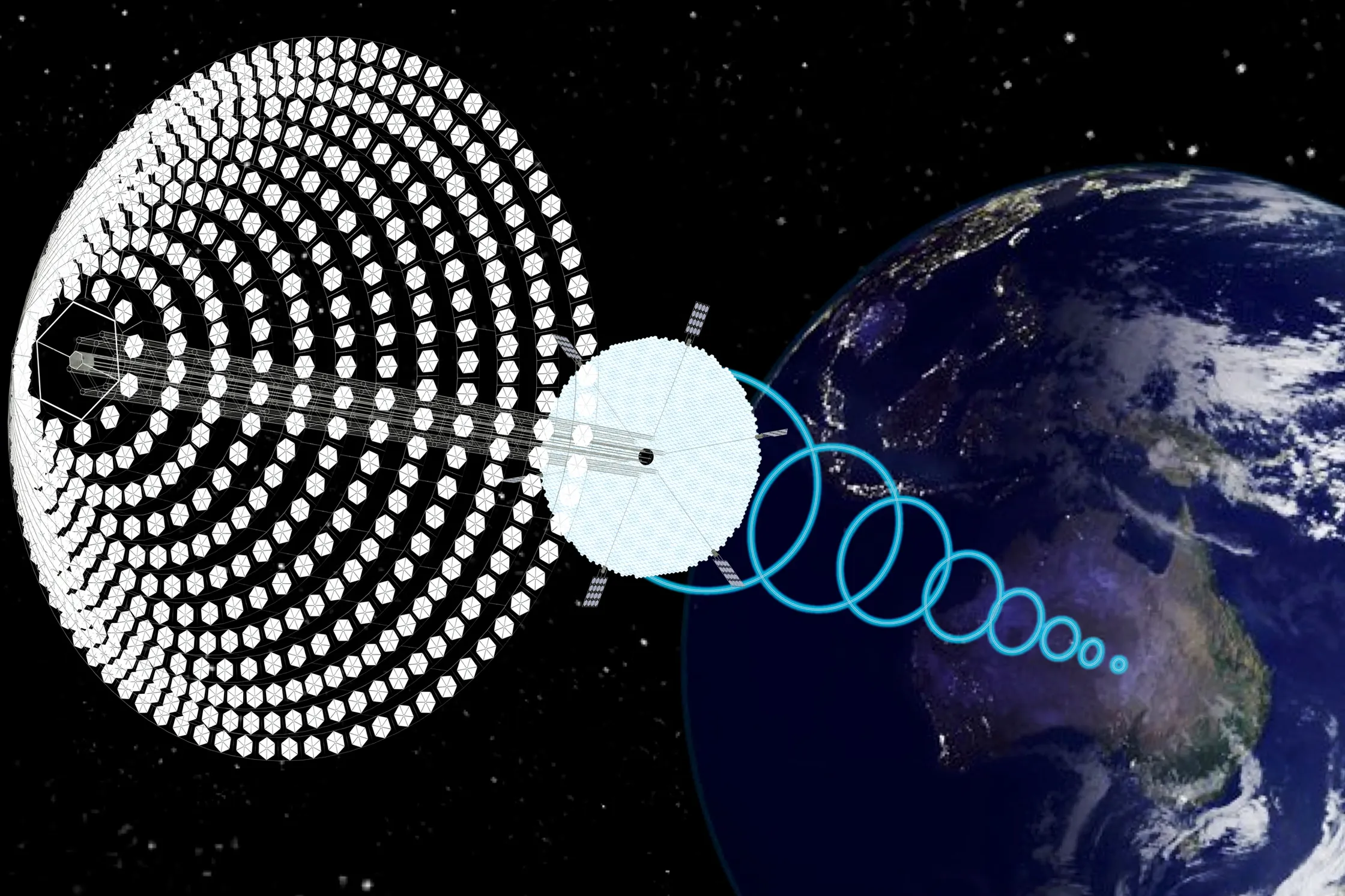
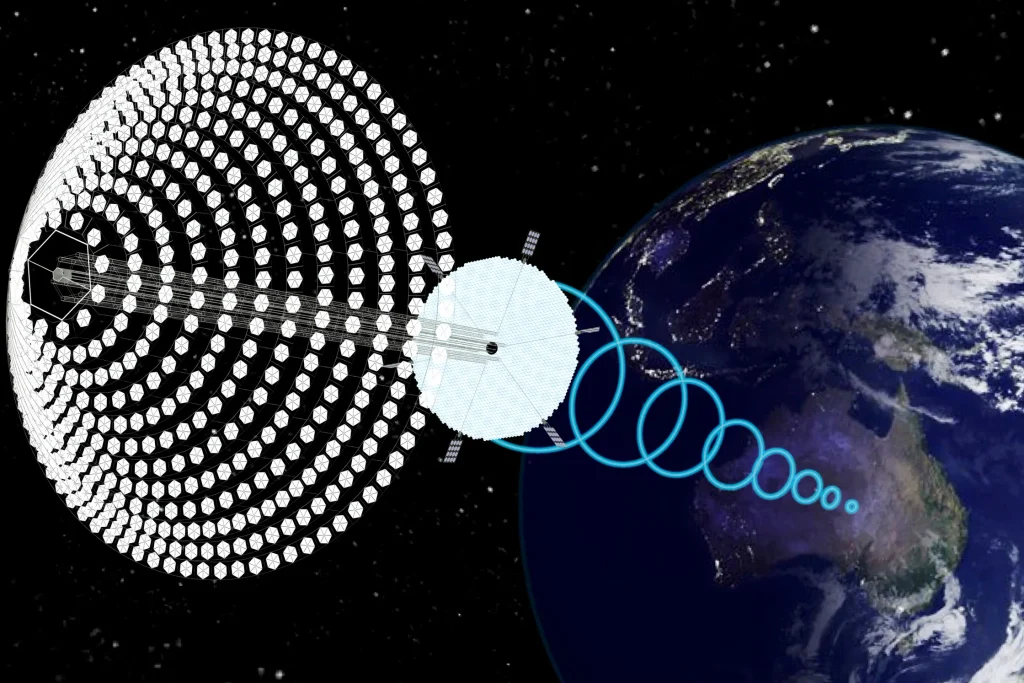
For decades, space-based solar power (SBSP) belonged strictly to the realm of science fiction. The concept—collecting intense, unattenuated solar energy in orbit and beaming it wirelessly down to Earth via microwaves or lasers—offered a flawless theoretical solution to the energy transition: continuous, 24/7 carbon-free energy unaffected by weather, night cycles, or atmospheric reflection.
Yet, the economics rendered it impossible. Launching thousands of metric tons of heavy solar arrays into geostationary orbit (GEO) historically cost tens of thousands of dollars per kilogram, making orbital power plants commercially unviable.
Today, that economic equation is being rewritten.
A dramatic collapse in space launch costs, breakthroughs in lightweight phased-array transmitters, and the urgent need for zero-carbon baseload energy are transforming SBSP into one of the most compelling deep-tech investment frontiers. Here is an analytical look at why venture capital firms, space agencies, and defense innovators are suddenly underwriting orbital energy.
THE LAUNCH COST CATALYST: THE $100/KG PARADIGM SHIFT
The fundamental bottleneck for space-based solar power has always been launch economics. Delivering a multi-gigawatt solar collector into orbit requires massive payload capacity.
The rise of fully reusable heavy-lift launch vehicles (such as SpaceX’s Starship and next-generation heavy launchers) is compressing launch costs from historical averages of $10,000–$20,000/kg down toward $100–$500/kg.
This orders-of-magnitude reduction alters the unit economics of orbital infrastructure:
- Mass-Production Satellite Swarms: Rather than launching single monolithic structures, startups are designing modular, self-assembling swarms of lightweight reflector satellites.
- Capital Efficiency: Lower launch costs shift the CapEx burden away from rocket fuel and toward high-efficiency photovoltaic materials and high-frequency microwave transmission systems.
For venture capital investors, this cost trajectory opens a window where orbital hardware economics begin to mirror traditional terrestrial infrastructure payback periods.
THE PHYSICS & ADVANTAGE: UNMATCHED CAPACITY FACTORS
Terrestrial solar panels suffer from two inherent physical limitations: day-night cycles and atmospheric degradation (clouds, dust, and atmospheric filtering). As a result, terrestrial solar farms typically achieve capacity factors between 15% and 25%.
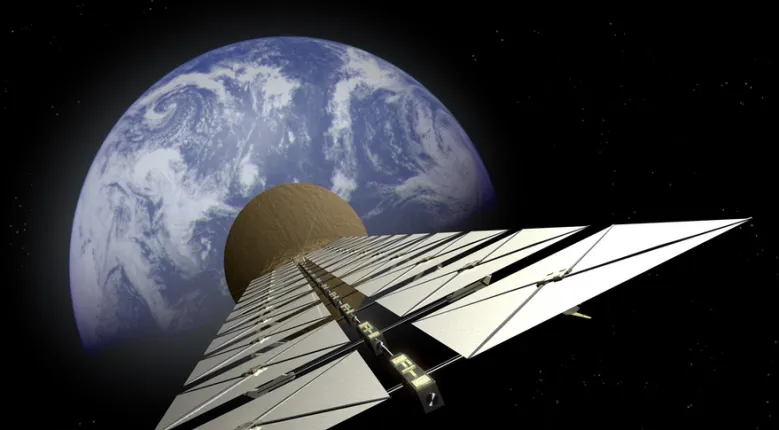
Orbital solar harvesters operating in geostationary orbit receive continuous, unfiltered sunlight at roughly 1,360 watts per square meter—delivering up to 8 times more energy per square meter than panels on Earth.
Key operational advantages include:
- 99%+ Capacity Factor: Satellites in GEO remain in near-constant sunlight year-round, entering Earth’s shadow only briefly during equinoxes.
- Flexible Beaming & On-Demand Dispatch: Unlike fixed ground assets, a solar power satellite can electronically steer its power beam to different receiving antennas (rectennas) on Earth, instantly directing power to wherever spot energy prices or grid demands are highest.
- Zero Land Use Constraints: The harvesting happens in space, requiring only ground-based rectennas that can be co-located over agricultural land, desert areas, or offshore coastal regions.
KEY TECHNOLOGICAL BREAKTHROUGHS DRIVING STARTUP VALUATIONS
Venture-backed startups and research consortia are focusing their intellectual property on three critical technological pillars:
A. Wireless Power Transmission (WPT)
Transmitting gigawatts of power safely through Earth’s atmosphere requires precise wireless power transfer. Startups utilize low-frequency microwave beams (typically 2.45 GHz or 5.8 GHz) or optical lasers. Microwaves pass through clouds, rain, and atmospheric haze with minimal power loss, ensuring reliable power delivery regardless of weather.
B. High-Power Phased-Array Steering
Mechanically pointing massive space structures toward Earth is inefficient. Modern designs use solid-state phased-array antennas that steer the energy beam electronically with sub-degree accuracy, ensuring safety and preventing beam drift.
C. Ultra-Lightweight Photovoltaics and In-Space Assembly
Innovations in thin-film photovoltaics and autonomous robotic assembly allow satellites to unfurl massive kilometer-scale structures in orbit without human intervention, drastically reducing risk and operational costs.
RISKS, DUAL-USE APPLICATIONS, AND THE VC UNDERWRITING FRAMEWORK
Investing in orbital energy requires managing a unique combination of deep-tech, regulatory, and geopolitical risks:
- Spectrum Allocation and Regulatory Approvals: Securing international frequency allocations for high-power microwave transmission requires approval from bodies like the International Telecommunication Union (ITU).
- Efficiency Stack Losses: Conversion efficiency from solar-to-electricity (in space), electricity-to-microwaves, atmospheric transmission, and microwave-to-DC electricity (on ground) creates compounding energy losses. Current designs target a net end-to-end efficiency of 15% to 20%.
- Dual-Use Defense Capital: Due to the strategic importance of high-power wireless transmission, early funding is heavily supported by government defense grants (such as the US Air Force Research Laboratory’s SSPIDR program and European Space Agency initiatives). Venture investors often look for startups that can monetize defense, microgrid, or remote-mining power delivery before scaling to utility-scale grid power.
CONCLUSION: THE ULTIMATE FRONTIER IN CLEAN BASELOAD POWER
Space-Based Solar Power is transitioning from a theoretical moonshot to a commercially actionable engineering roadmap. As launch costs continue to plummet and the demand for continuous, zero-carbon baseload power escalates globally, orbital energy stands as one of the ultimate asymmetric bets in clean technology.
For venture capital investors, early movers who solve the wireless power transfer, modular assembly, and ground-rectenna integrations will not just participate in the energy transition—they will tap into an infinite energy source above the clouds.
Deja una respuesta