
For decades, software has transformed the way we communicate, work and do business. Now, a new technological revolution is emerging—one that doesn’t rely on lines of code, but on living cells. Synthetic biology is redefining what is possible by applying engineering principles to biology, enabling scientists to design organisms capable of producing everything from life-saving medicines to sustainable fuels and biodegradable materials.

What once belonged to the realm of scientific research is rapidly becoming a major industrial opportunity. As artificial intelligence, automation and biotechnology converge, synthetic biology is attracting unprecedented levels of investment from venture capital firms, governments and multinational corporations eager to reshape some of the world’s largest industries.
Many analysts now believe that biology could become the next programmable platform, with synthetic biology laying the foundation for an entirely new bioeconomy worth trillions of dollars
BIOLOGY BECOMES AN ENGINEERING DISCIPLINE
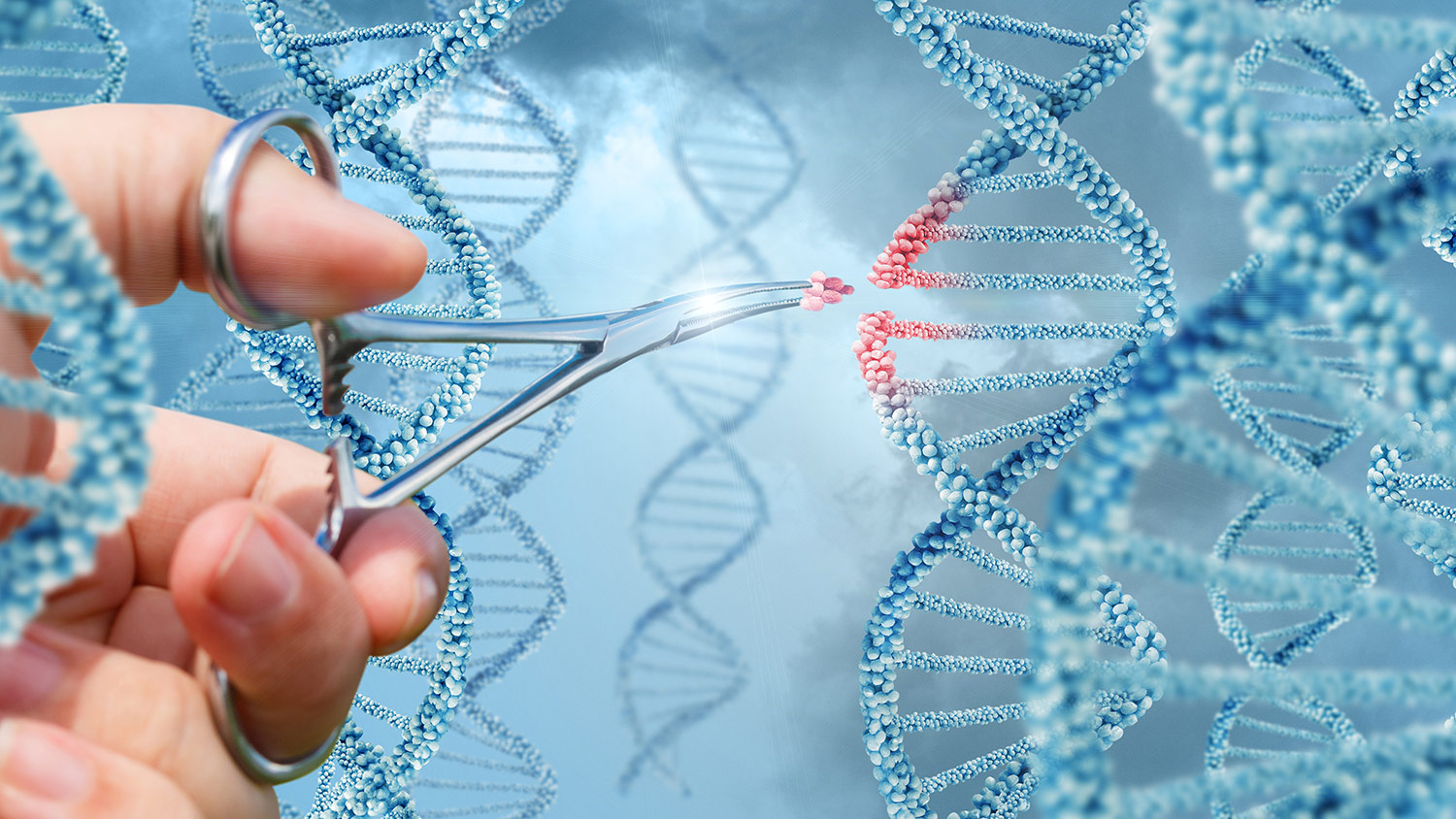
Traditional biotechnology has long relied on modifying living organisms to produce useful compounds. Synthetic biology takes this concept much further. Instead of making isolated genetic modifications, researchers design biological systems from the ground up, treating DNA as programmable code that can be written, tested and optimized much like software.
Advances in DNA sequencing, gene synthesis and genome editing have dramatically reduced both the cost and time required to engineer microorganisms. At the same time, automated laboratories equipped with robotics can perform thousands of experiments simultaneously, while machine learning algorithms analyze the results and suggest improved designs.
This iterative «Design-Build-Test-Learn» approach has accelerated innovation at a pace that would have been unimaginable just a decade ago.
WHY INVESTORS ARE PAYING ATTENTION TO SYNTHETIC BIOLOGY
Several technological breakthroughs have aligned to make synthetic biology commercially viable.
The cost of reading and writing DNA has fallen exponentially, making biological engineering far more accessible. Artificial intelligence is accelerating protein design and molecular discovery, allowing researchers to identify promising biological solutions in days instead of years. Meanwhile, automation has significantly reduced laboratory costs while increasing experimental throughput.
At the same time, governments around the world are seeking alternatives to fossil fuel-based manufacturing, encouraging investment in sustainable production methods capable of reducing emissions and dependence on scarce natural resources.
For venture capital firms, synthetic biology represents an opportunity comparable to the early days of cloud computing or artificial intelligence: a foundational technology with applications across multiple trillion-dollar industries.
TRANSFORMING INDUSTRIES FAR BEYOND HEALTHCARE
Although healthcare remains one of the most visible applications, synthetic biology is extending its influence into sectors that have historically relied on chemical manufacturing or intensive resource extraction.
In medicine, engineered cells are opening new possibilities for personalized therapies, gene editing and vaccine development. Artificial intelligence is also accelerating drug discovery by identifying novel proteins and predicting molecular interactions with unprecedented accuracy.
Manufacturing is experiencing an equally profound transformation. Instead of relying on petroleum-derived chemicals, companies are engineering microorganisms capable of producing industrial chemicals, enzymes, biodegradable plastics and advanced materials through biological fermentation processes. These methods often consume fewer resources while generating significantly lower carbon emissions.
Agriculture is also being reshaped through engineered microbes that improve soil fertility, reduce fertilizer dependence and enhance crop resilience against climate change. Biological alternatives to pesticides and fertilizers promise to increase agricultural productivity while minimizing environmental impact.
Perhaps one of the fastest-growing segments is food technology. Precision fermentation enables companies to produce dairy proteins, egg proteins and specialty fats without raising animals, while cultivated meat startups continue refining technologies capable of producing meat directly from animal cells. These innovations could fundamentally alter global food production over the coming decades.
Even the energy sector is beginning to benefit from synthetic biology. Researchers are developing microorganisms capable of producing sustainable aviation fuels, converting industrial waste gases into valuable chemicals and supporting carbon capture initiatives through biological processes.
THE STARTUPS LEADING THE BIOECONOMY
A growing ecosystem of startups is turning scientific breakthroughs into commercial products.
Companies such as Ginkgo Bioworks have built platforms for programming cells as easily as software developers write code. Twist Bioscience has revolutionized synthetic DNA manufacturing, making genetic material more accessible for research and industrial applications. Perfect Day and Formo are pioneering animal-free dairy products using precision fermentation, while Solugen is replacing petroleum-based chemicals with biological alternatives.
Meanwhile, companies like LanzaTech are demonstrating how engineered microorganisms can transform industrial carbon emissions into fuels and valuable chemicals, illustrating synthetic biology’s potential to contribute directly to decarbonization efforts.
These companies are not simply creating new products—they are building entirely new manufacturing platforms.
THE POWER OF AI AND BIOLOGY
Artificial intelligence may prove to be the catalyst that propels synthetic biology into mainstream industry.
Machine learning models can predict protein structures, simulate biological pathways and optimize genetic designs before laboratory testing even begins. This dramatically reduces research costs while increasing the probability of successful outcomes.
Rather than replacing scientists, AI enables researchers to explore biological possibilities at a scale impossible through traditional experimentation alone. The combination of computational biology, robotics and high-throughput experimentation is transforming biological engineering into a data-driven discipline.
As these technologies continue to mature, the pace of innovation is expected to accelerate even further.
CHALLENGES STILL REMAIN WITH SYNTHETIC BIOLOGY
Despite its enormous promise, synthetic biology faces significant obstacles before reaching widespread adoption.
Scaling biological manufacturing from laboratory experiments to industrial production remains technically complex and capital intensive. Regulatory frameworks continue evolving as governments attempt to balance innovation with biosafety and ethical considerations. Public perception also plays an important role, particularly when products involve genetically engineered organisms or novel food technologies.
For investors, another challenge lies in the long commercialization cycles typical of biotechnology. Unlike software startups, many synthetic biology companies require years of research and substantial funding before reaching profitability.
Nevertheless, these barriers may also strengthen the competitive advantages of companies capable of overcoming them.
TO SUM UP: WHY IS SYNTHETIC BIOLOGY IMPORTANT?
Synthetic biology is moving beyond academic laboratories to become one of the defining technologies of the twenty-first century. By combining biology with artificial intelligence, automation and advanced engineering, it has the potential to transform healthcare, manufacturing, agriculture, food production and energy systems on a global scale.
As governments seek more sustainable industrial models and investors continue searching for the next major technological platform, synthetic biology stands out as one of the most promising frontiers of innovation. Whether it ultimately becomes a trillion-dollar industry remains to be seen, but its growing influence suggests that the ability to engineer living systems could become as economically transformative as the rise of software or the internet itself.
Deja una respuesta